
A mother once sat across from our team at AMAR Home and asked a question we hear in some form almost every week: “Where did we go wrong?” Her son was twenty-two, a university graduate, and had been using yaba for over a year before the family found out. She wasn’t looking for blame. She wanted to understand.
That question, why does this happen, deserves a real answer, not a vague one about “bad company” or “weak willpower.” Drug addiction in young adults grows out of a mix of brain biology, family patterns, social pressure, and unmet emotional needs. None of these causes act alone, and understanding them is often the first step families take before they ever pick up the phone to call a rehab center.
This guide breaks down the actual causes behind young adult addiction in Bangladesh, why this age group is especially at risk, and what real treatment at the best rehab center in Dhaka, Bangladesh looks like once those causes are on the table.
Why This Question Matters So Much Right Now
Bangladesh is seeing a steady rise in substance use among people in their late teens and twenties. Most people who walk through the doors of a rehab center for the first time fall somewhere in the 15 to 30 age range, and Dhaka, with its dense population, exam pressure, and easy access to substances like yaba and phensedyl, sees more of this than most other parts of the country.
Parents often notice something is wrong long before they understand what caused it. If you’re trying to work out whether what you’re seeing at home fits the pattern, our earlier post on How to recognize the early signs of drug addiction in BD walks through the behavioral, physical, and emotional changes to watch for. This article goes one layer deeper and looks at what actually pushes a young adult toward that first use, and then toward dependency.
The Real Causes Behind Drug Addiction in Young Adults
1. A Brain That Isn’t Finished Growing
The part of the brain responsible for judgment, impulse control, and weighing long-term consequences, the prefrontal cortex, is still developing well into a person’s mid-twenties. That’s not an excuse for risky choices, but it explains a lot. A young adult’s brain is naturally wired to chase reward and novelty faster than it can assess risk. Add a stressful trigger, like a breakup, a failed exam, or a family conflict, and that same brain reaches for whatever offers quick relief. Repeated use during this window also changes how the brain’s reward system responds to dopamine, which is part of why addiction can take hold faster in this age group than in older adults.
2. What’s Happening at Home
Family environment shapes almost everything about how a young person copes with stress. Homes with constant conflict, emotional distance, or a parent who is themselves struggling with substance use raise the risk significantly. So does the opposite extreme: households where achievement is demanded but emotional needs go unnoticed. A young adult who never learned healthy ways to process disappointment, grief, or anger is far more likely to look for a chemical shortcut when those feelings become overwhelming. We’ve written in more detail about this dynamic, along with what a family can actively do about it, in How families can support drug recovery in Bangladesh.
3. Peer Pressure and the Need to Belong
Young adulthood is when belonging matters most and self-identity is still forming. In cities like Dhaka, where social circles form early around universities, coaching centers, and neighborhood groups, one or two peers using substances can normalize it for an entire friend group surprisingly fast. It rarely starts with pressure in the dramatic sense. It usually starts with curiosity, a “just try it once,” and a fear of being left out.
4. Academic and Career Pressure
Bangladesh’s education and job market puts intense pressure on young people to perform, get into the right university, land a stable job, and meet family expectations. When that pressure isn’t matched with emotional support, some young adults turn to stimulants to cope with exam stress or sedatives to numb the anxiety of falling behind. This pressure rarely gets discussed openly, which makes it one of the more overlooked causes families miss.
5. Undiagnosed Mental Health Struggles
A large number of young adults who develop substance use disorders are dealing with anxiety, depression, trauma, or attention difficulties that were never properly diagnosed or treated. Drugs become a form of self-medication, numbing symptoms that talking to a professional could have addressed directly. This overlap, known as a co-occurring disorder or dual diagnosis, is one of the reasons addiction treatment has to look at mental health and substance use together rather than treating one and ignoring the other. We go into this connection further in How rehab centers help rebuild lives after addiction.
6. Easy Access and a False Sense of Control
Substances like yaba, phensedyl, and cannabis are, unfortunately, not hard to find in many parts of Dhaka. Combine that access with a young adult’s tendency to believe “I can stop whenever I want,” and experimentation turns into habit faster than most families expect. This false sense of control is one of the most common things we hear during intake assessments at AMAR Home.
7. Stigma That Delays Everything
In Bangladeshi households, addiction is still too often treated as a moral failure rather than a medical condition. That stigma keeps young people from admitting they have a problem and keeps families from seeking outside help until a crisis forces the issue. The longer that silence continues, the deeper the addiction sets in, and the harder recovery becomes.
When These Causes Go Unaddressed
Left untreated, the causes above don’t stay still. They compound. Academic pressure turns into dropped semesters. Peer influence turns into a completely reshaped social circle. Undiagnosed anxiety turns into full-blown dependency. Families often tell us they wish they had acted at the first sign of trouble rather than waiting for a crisis, an arrest, a health scare, or a breaking point that could no longer be ignored.
This is exactly why identifying the root cause matters as much as recognizing the symptoms. Treating the addiction without addressing what caused it usually leads to relapse, because the underlying need the substance was filling never actually goes away on its own.
How a Rehab Center Addresses the Root Cause, Not Just the Habit
A well-run rehabilitation center doesn’t just help someone stop using. It works backward from the addiction to find out what put the person there in the first place, then treats that alongside the substance use itself. That typically includes:
- A detailed intake assessment covering medical history, mental health, and family background
- Medically supervised detox to safely clear the substance from the body
- Individual counseling to work through the trauma, stress, or emotional gap the addiction was covering
- Family counseling, so the environment a young adult returns to is part of the solution, not a trigger for relapse
- Structured aftercare, since recovery doesn’t end on discharge day
For a broader look at how this process works from admission to aftercare, our post on How rehabilitation centers help in drug addiction recovery covers each stage in detail and What a Rehab center is and How it works is a good starting point if you’re new to the process entirely.
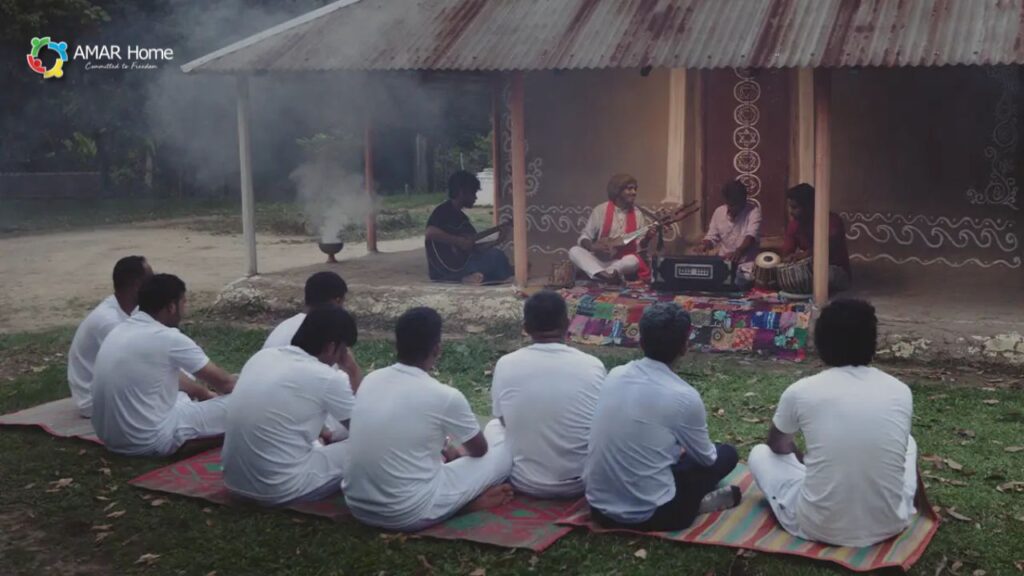
Why AMAR Home is the Best Rehab Center in Dhaka, Bangladesh for Young Adults
AMAR Home has operated as a rehab center in Bangladesh since 2012, and our treatment team is led by licensed psychiatrists, including Dr. Chiranjeeb Biswas of MCW&H and Dr. Mohammad Shibli Sadiq of NIMH, alongside a resident medical officer and trained counseling staff. We hold DNC licensure from the Government of Bangladesh and ISO 9001:2015 certification, and our admission coordinator handles every initial family consultation personally, so no one has to navigate this alone through a form or a call center.
Because young adult addiction so often has roots in family dynamics, academic pressure, or undiagnosed mental health struggles, our approach doesn’t stop at detox. We offer two residential paths depending on the severity of the case:
- Intensive Program (17 days): A structured, fast-track option for individuals ready to commit to voluntary rehabilitation.
- Long-Term Program (approximately 4 months): Our most complete path, covering medically supervised detox, residential therapy, holistic care through yoga, meditation, and Ayurvedic practices, and two months of structured aftercare once treatment ends.
Both programs include monthly family counseling, because the causes we’ve outlined above rarely exist in isolation from the people closest to the patient. If you want to see exactly what a typical day inside treatment looks like, Our Post on Daily life at the Best Rehab Center in Bangladesh walks through the routine hour by hour. And if you’re still comparing options, How to choose the best rehab center in Bangladesh lays out exactly what to look for before committing to any facility.
A Note for Parents, and for Young Adults Reading This
If you’re a parent reading this because you suspect something is wrong, you’re not overreacting, and you’re not alone. Most families who come to AMAR Home tell us they wish they had reached out sooner.
And if you’re a young adult who sees yourself somewhere in this article, that recognition alone takes real honesty. Addiction isn’t a character flaw. It’s a medical condition with real, identifiable causes, and every one of them can be addressed with the right support.
Getting Help at AMAR Home
AMAR Home is located at House 46, Road 02, Sector 09, Uttara, Dhaka-1230. You can reach our admission coordinator directly at +8801976-131313 or by email at pr.amarhome@gmail.com for a confidential, no-pressure conversation about what treatment could look like for your family.
Frequently Asked Questions
At What age does drug addiction usually start in Bangladesh?
Most people who develop substance use disorders in Bangladesh begin experimenting between ages 15 and 18, though dependency often isn’t recognized by families until years later, typically in the person’s early twenties.
Can a young adult recover from addiction without professional treatment?
Some people manage to stop on their own, but for most, especially where substances like yaba or heroin are involved, medically supervised detox and structured therapy through a licensed rehab center in Dhaka, Bangladesh significantly improve the odds of lasting recovery.
Is addiction in young adults always linked to mental health issues?
Not always, but it’s common enough that most rehab programs screen for co-occurring conditions like anxiety, depression, or trauma during intake. Treating both together, rather than one at a time, tends to produce more stable, long-term results.
How do I start the process of getting my child into treatment?
The first step is usually a phone call. At AMAR Home, our admission coordinator speaks with every family personally to understand the situation before recommending a program, either the Intensive Program or the Long-Term Program, based on the severity of the case.